
Low-Fiber Diet for Colonoscopy: A Complete Guide
Introduction
A low fiber diet for colonoscopy is one of the most important diagnostic and preventive procedures in modern medicine. It allows doctors to visually examine the inside of the colon and rectum using a thin, flexible tube with a camera. The procedure can detect colorectal cancer, polyps, ulcers, bleeding, and inflammatory bowel disease. However, for colonoscopy to be successful, the bowel must be thoroughly cleansed so the doctor has a clear view.
One of the key steps in colonoscopy preparation is adopting a low-fiber diet in the days leading up to the procedure. Fiber, though normally a vital part of a healthy diet, leaves residue in the intestines that can make it harder to clean the colon effectively. This is why gastroenterologists often instruct patients to follow a low-fiber or low-residue diet several days before their colonoscopy.
This article provides a complete, in-depth guide (approx. 3000 words) on the subject, covering what a low-fiber diet is, why it matters, what foods are allowed or restricted, meal plan ideas, practical tips, and answers to frequently asked questions.
1. Understanding Fiber and Its Role
1.1 What is Fiber?
Dietary fiber is the indigestible part of plant-based foods such as fruits, vegetables, grains, legumes, nuts, and seeds. Unlike carbohydrates, proteins, or fats, fiber does not get fully broken down in the digestive tract. Instead, it passes through relatively intact, adding bulk to stool.
There are two main types of fiber:
-
Soluble fiber: dissolves in water, forming a gel-like substance that helps regulate blood sugar and cholesterol (e.g., oats, apples, beans).
-
Insoluble fiber: does not dissolve in water, speeds up digestion, and adds bulk to stool (e.g., wheat bran, raw vegetables, nuts).
Both types are important for digestive health—but before colonoscopy, they can leave residue in the colon that makes visualization difficult.
1.2 Why Reduce Fiber Before Colonoscopy?
Fiber-rich foods leave behind undigested particles, skins, and seeds that can cling to the colon wall. These residues may obscure the view of the intestinal lining, making it harder to detect small polyps or other abnormalities.
A low-fiber diet minimizes this residue, ensuring a cleaner bowel during the preparation phase.
2. What is a Low-Fiber Diet?
A low-fiber diet, also called a low-residue diet, is a temporary eating plan designed to limit foods that are high in roughage. The goal is to reduce the amount of undigested material that passes through the intestines.
2.1 Key Principles of a Low-Fiber Diet
-
Avoid whole grains (brown bread, whole wheat pasta, bran, brown rice).
-
Avoid raw fruits and vegetables with skins, seeds, or tough fibers.
-
Avoid nuts, seeds, legumes, and dried fruits.
-
Focus on refined grains, cooked vegetables without skins, lean meats, eggs, and dairy.
-
Stick to clear fluids in the final 24 hours before colonoscopy.
2.2 Fiber Restriction Levels
-
Normal diet: 25–35 grams/day of fiber.
-
Low-fiber diet: about 10–15 grams/day.
-
Clear-liquid diet: virtually zero fiber.
3. Foods to Eat and Avoid Before Colonoscopy
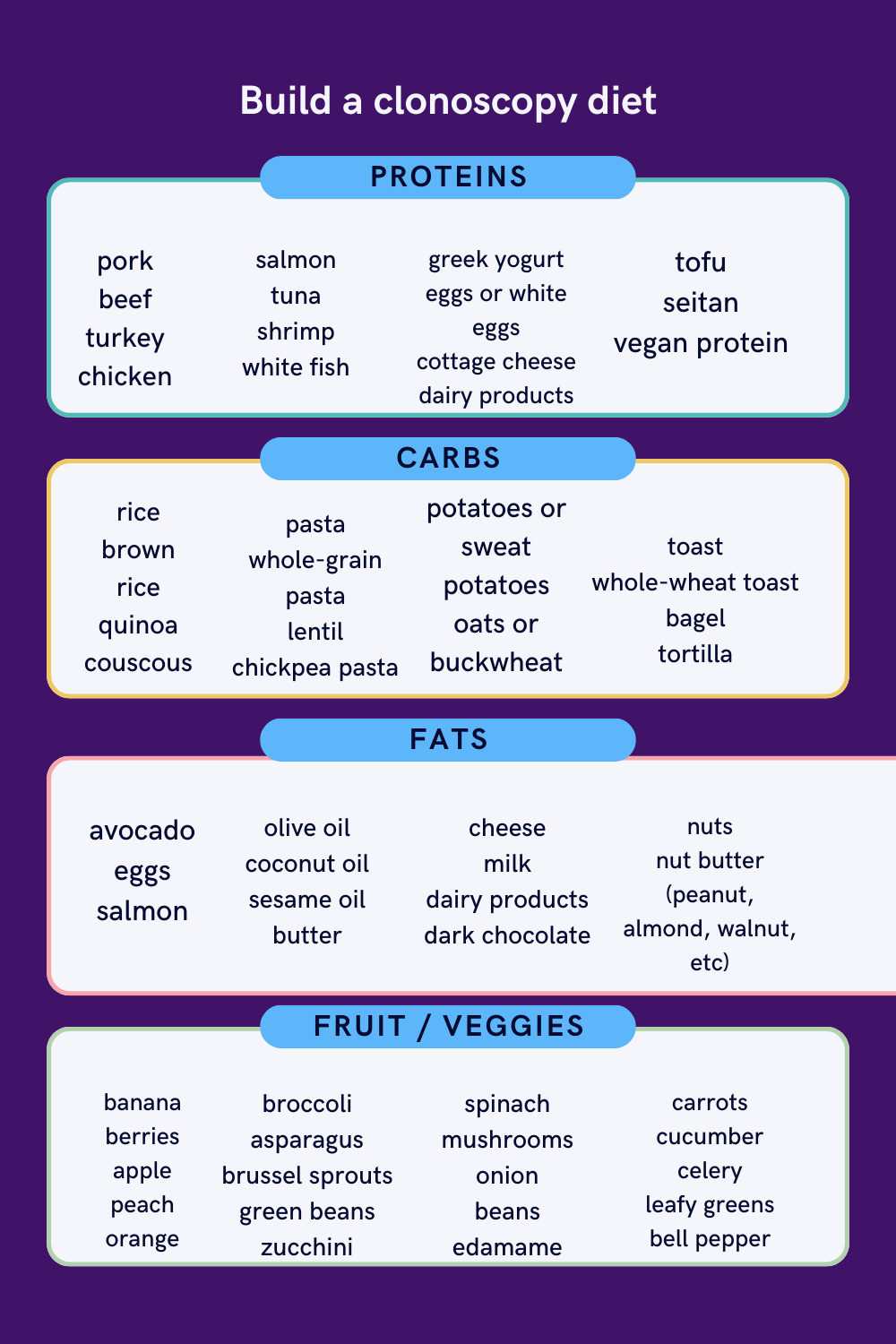
3.1 Foods Allowed (Low-Fiber Choices)
-
Refined grains: white bread, white rice, plain pasta, crackers.
-
Cooked vegetables (without skin/seeds): carrots, zucchini, potatoes (peeled), pumpkin.
-
Fruits (without skin/seeds): applesauce, ripe bananas, canned peaches or pears.
-
Proteins: chicken, turkey, fish, eggs, tofu.
-
Dairy: milk, yogurt (without fruit pieces), cheese, butter.
-
Clear broths and soups.
3.2 Foods to Avoid
-
Whole grains: brown rice, oatmeal, granola, multigrain bread.
-
Raw vegetables: broccoli, cabbage, lettuce, spinach, corn.
-
Raw fruits with skins/seeds: apples, grapes, strawberries, oranges.
-
Dried fruits and nuts: raisins, almonds, peanuts, sunflower seeds.
-
Legumes: beans, lentils, chickpeas.
-
Fatty, fried, or heavily spiced foods.
4. Sample Low-Fiber Diet Plan for Colonoscopy
Here’s a 3-day sample meal plan leading up to colonoscopy (Day -3 to Day -1).
Day -3 (Three Days Before Colonoscopy)
-
Breakfast: White toast with butter, scrambled eggs, banana (ripe, without skin).
-
Snack: Yogurt without fruit pieces.
-
Lunch: Grilled chicken breast, peeled boiled potatoes, steamed carrots.
-
Snack: Crackers with cream cheese.
-
Dinner: White rice with baked fish, zucchini (peeled, cooked).
Day -2 (Two Days Before Colonoscopy)
-
Breakfast: White bread with honey, boiled egg.
-
Snack: Applesauce.
-
Lunch: White pasta with butter and parmesan, skinless chicken.
-
Snack: Cheese slices.
-
Dinner: Mashed potatoes (peeled) with baked turkey, pumpkin puree.
Day -1 (One Day Before Colonoscopy – Clear Liquid Only)
-
Breakfast: Clear apple juice, black coffee (no milk).
-
Snack: Gelatin dessert (yellow or green, not red/purple).
-
Lunch: Clear chicken broth, electrolyte drink.
-
Snack: Clear soda, ice pops (not red/purple).
-
Dinner: Vegetable broth, clear juice.
Note: Stop all solid foods at least 24 hours before the colonoscopy.
5. Practical Tips for Following a Low-Fiber Diet
-
Read labels carefully – avoid foods with “whole wheat,” “bran,” “seeds,” or “high fiber.”
-
Cook vegetables thoroughly – steaming or boiling makes them easier to digest.
-
Peel and deseed fruits/vegetables – skins and seeds are high in fiber.
-
Stay hydrated – drink plenty of water, clear juices, or electrolyte drinks.
-
Avoid red or purple liquids – they can mimic blood in colonoscopy visuals.
-
Follow your doctor’s prep instructions – including laxatives or bowel prep solution.
6. Special Considerations
6.1 Diabetic Patients
If you have diabetes, discuss adjustments with your doctor. Liquid diets can spike or drop blood sugar, so careful monitoring is required.
6.2 Vegetarian or Vegan Patients
Plant-based eaters should focus on refined grains, tofu, peeled cooked vegetables, and clear fruit juices.
6.3 Patients with IBS or Crohn’s Disease
Already accustomed to low-residue diets, these patients may find prep easier, but doctor guidance is essential.
7. Common Mistakes to Avoid
-
Eating high-fiber foods like popcorn, nuts, or raw salads just before prep.
-
Drinking milk or creamy soups on the last day instead of clear liquids.
-
Forgetting to avoid red/purple-colored beverages.
-
Not drinking enough clear fluids, leading to dehydration.
8. Frequently Asked Questions
Q1. How many days should I follow a low-fiber diet before colonoscopy?
Most doctors recommend 2–3 days. Always confirm with your healthcare provider.
Q2. Can I drink coffee or tea?
Yes, but without milk or cream. Sugar is allowed.
Q3. Why avoid red or purple liquids?
They can look like blood during colonoscopy and confuse results.
Q4. Can I eat eggs before colonoscopy?
Yes, eggs are low in fiber and easy to digest.
Q5. What if I accidentally eat fiber the day before?
Inform your doctor; sometimes the colonoscopy may need rescheduling if prep is poor.
9. Conclusion
A low-fiber diet is a crucial step in preparing for a colonoscopy. By temporarily avoiding whole grains, raw fruits and vegetables, nuts, seeds, and legumes, you can help ensure that your bowel is clean and that your doctor has the clearest possible view of the colon.
Combining this diet with proper hydration and following medical instructions about bowel-cleansing solutions will maximize the effectiveness of the procedure. Remember, colonoscopy is not only diagnostic but also preventive—it can help detect cancer early or even remove precancerous polyps. Following the dietary guidelines may seem restrictive, but it is a short-term adjustment with long-term benefits.